Engineering Firm Weathers Disasters of All Kinds with Carbonite

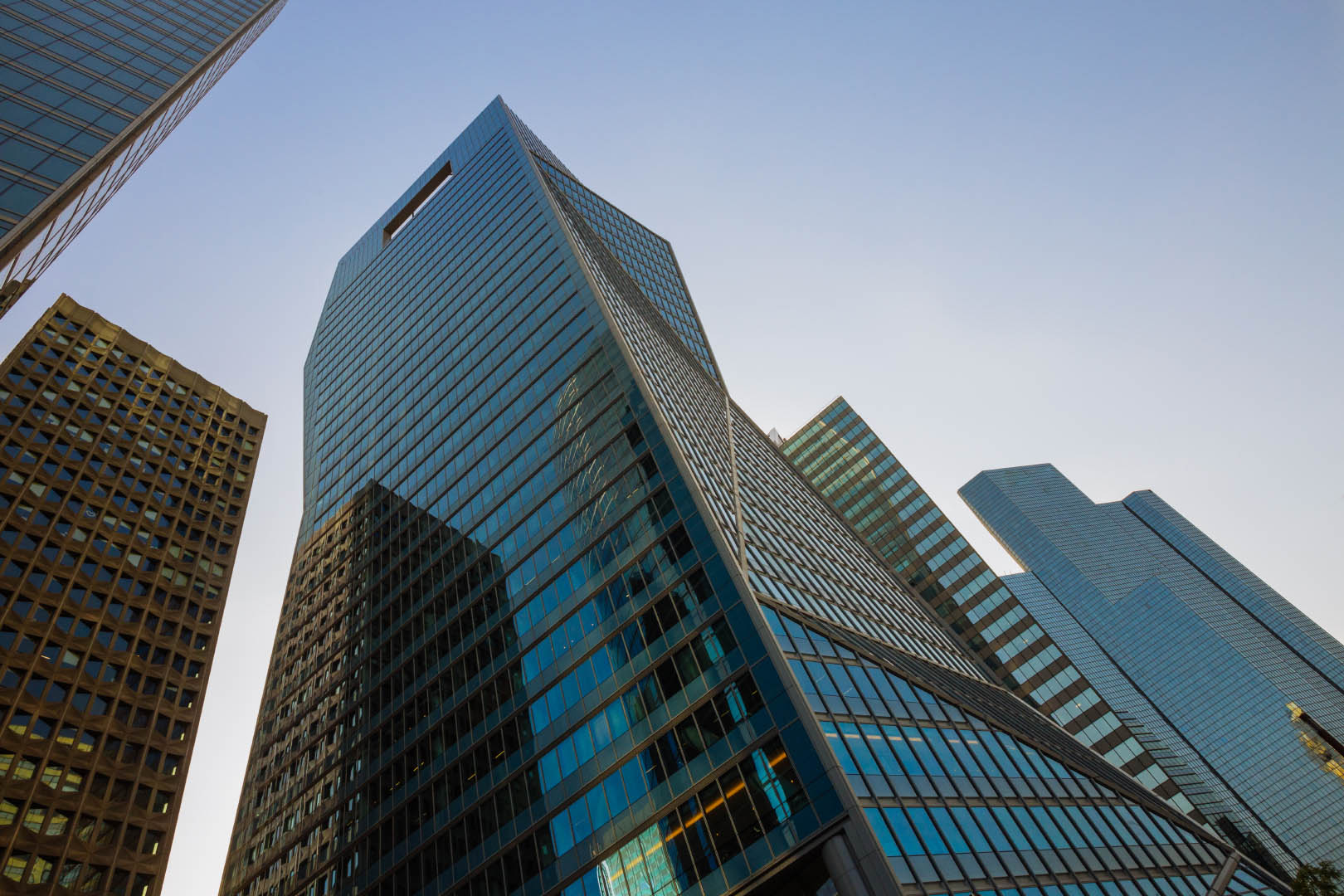
When you step out onto the glass floor of the Grand Canyon Sky Observatory, or peer up at the spire of Burj Khalifa, the tallest building in the world, you’re looking at Rowan Williams Davies & Irwin’s (RWDI) projects. The environmental and wind engineering company has consulted on some of the most iconic engineering projects in the world. Taipei 101, London’s Millennium Bridge and New York’s Freedom Tower are also among the company’s projects. The RWDI team use boundary layer wind tunnels and advanced simulation software to help design structures that stand the test of time. And, that analysis process generates a lot of data.

The Data Needs of Skyscraper Design

“A 3-D drawing of a 100-story building can run to 3 or 4 TB worth of data” says John Cassolato, a Senior Network and Systems Engineer at RWDI. The company’s engineers analyze raw data from wind tunnel simulations with specialty software to make sure clients’ designs will be able to withstand local wind patterns and extreme weather events. All this creates an average data foot print greater than 25 TB per project.

RWDI works with clients on high profile and record-setting structures, so they frequently sign Non-Disclosure Agreements to protect their clients’ data before they go public with finalized designs. Given tight project timelines of two months or less, RWDI’s data protection strategy has to keep up with their clients’ ambitions.

RWDI’s work is so niche and technical that the company’s 7-person IT team must support over 15,000 different applications, including AutoCAD, SolidWorks, SolidCAD, RHINO and hundreds of proprietary applications developed in-house. The company’s main file server holds about 27 million files and 20% of that is active data, which is modified daily.

Building a Long-term Data Protection Strategy

RWDI partners with Jorge Barreto and Tom Glover at CognoSystems, a managed service provider, to help support their data protection needs. Together, they have successfully protected RWDI’s data using Carbonite for almost 10 years. “Our partnership is very close” says Barreto, “we work together as a team to make sure RWDI’s data is protected.” When the RWDI team was initially assessing backup providers they needed a cost-effective solution that compressed and encrypted their backups and allowed them to recover their data reliably.

RWDI is currently backing up 700 TB of data with Carbonite Server. But, without the solution’s compression and de-duplication capabilities, RWDI would pay a lot more, in both hardware and licensing fees, to protect the same amount of data. “De-duplication and compression are really important features for us. Our data footprint grows by 90% per year, on average, so we need something that can scale cost-effectively,” said Cassolato.

Designing for Disasters

According to Marco Accardo, the Director of IT at RWDI, “Upon moving to a new location that caused us to consolidate datacenters we needed a new approach to hosting our backups for Disaster Recovery.” So, he worked with the Cogno team to develop an effective offsite backup replication project, designing a secondary data center that Cogno manages using Carbonite technology.

RWDI set up a disaster recovery site 60 miles from their primary facility that replicates all of their data. Now, if RWDI’s main server room goes down in a fire or flood, the RWDI and Cogno teams can recover data from their secondary site and continue work as usual.

Natural disasters aren’t the only events RWDI prepares for. Everyday technical issues are more frequent, if less newsworthy, than a disaster that takes out an entire neighborhood. “Recovering from everyday deletions is a critical component of business success in addition to recovering from one-off disasters. If your whole site goes down in a fire or a flood, clients understand that you need to re-provision hardware and push projects back,” said Cassolato “If you’re otherwise totally operational, but have an overwritten or deleted file, that’s not so understandable. Those everyday kinds of IT issues are the ones that can really hit a business.”

Accardo and his team were able to avoid a ransomware payout a couple of years ago by recovering data from a recent backup. He said that the RWDI team also recovers 5 or 6 accidentally deleted or over-written files each week. Every person in the IT department is trained to recover files within 5 minutes and their backups have a retention period of a year, in case old projects need to be revisited.

“If we weren’t able to recover some of our files, like our wind tunnel results, we would have to re-run and re-analyze tests, which could cost us hundreds of employee hours and hundreds of thousands of dollars,” said Accardo. Now, with the in-built resiliency and redundancy of server backup and disaster recovery, RWDI’s data protection strategy is designed to withstand everyday and large-scale disasters. Just like the buildings they are famous for.

DRaaS & IT Resiliency in a Vacuum

It’s a warm fuzzy thought to think that when an event occurs it’s confined to a rudimentary issue and can be quickly identified and remediated. It’s even better to think that during the event the C-level executive outside of information systems had partitioned the budget in the previous year to achieve that resiliency and meet the requirements of the applications. The business bounces back and has zero issues or user errors and no one is the wiser as to what had occurred – that’s “IT resilience in the vacuum”.

True resiliency is not defined due to its ever evolving posture. Purchasing the best of the best is not the answer; you’re protected, sure, but at a monster sticker price with a silo approach. The question I asked is “How do we achieve the business unit’s resiliency within our budgetary confines while meeting and exceeding the operational requirements?” New products and iterations of existing solutions come out on an annual basis. After paralyses through analyses on products, philosophies, market direction and so on people have a tendency to stay status quo – “if it isn’t broke don’t fix it”. This climate has created a daisy chain of “the innovator’s dilemma” passed onto the users thus resulting slower adoption rates of technologies.

The DRaaS & IT Resiliency Methodology

For a complete IT resiliency strategy, and to ensure that employees and customers don’t ever feel a disruption, you need to look out for three main signs on the road: continuous availability, workload mobility and cloud agility.

Continuous Availability

The most important thing you can do is deliver an ‘always-on’ customer experience – no matter what planned or unplanned changes are going on in the infrastructure. At its core, continuous availability is the approach to an IT system that protects users against downtime by keeping customers connected to their documents, data, and business applications. Think of it as breakdown cover for your IT.

Essentially, continuous availability means that whatever pothole you hit, be it a cyberattack, flood or planned work to improve IT, both you and your customers are completely protected against any disruption, good or bad.

Workload Mobility

Workload mobility is the insurance, or the business confidence, that allows you to move applications and data workloads with ease, all while being completely protected. This can cover anything from migrations to consolidations as a result of mergers and acquisitions or new efficiencies being driven within your organization.

Although workload mobility is not a new concept, many IT practitioners are moving workloads around much more regularly due to the rapid adoption of public cloud. With the multitude of public cloud options and cloud service providers on the market, it’s more important than ever that IT teams have easy, seamless and risk-free workload mobility and agility in order to unlock their on-premises environments and extend their data centers to the cloud. This is also key to many digital transformation journeys as the cloud provides cutting edge features and capabilities for organisations that don’t want to be locked in to one vendor along the way.

Cloud Agility

Fundamentally, creating a strategy that includes multi- and hybrid-cloud enables you to leverage the cloud to help accelerate your business and properly take advantage of what the cloud offers. The benefits of this include the freedom to choose your own cloud, and the ability to move to, from, and even between clouds that have vendor lock-in.

As part of IT modernization and transformation, the common use case is moving disaster recovery and backup to the cloud, while reducing physical data centers. Speed-to-market is a critical element of digital transformation, and the cloud can provide that by driving new efficiencies and getting applications to market quicker, without having to worry about underlying infrastructure costs or maintenance.

All three of these elements working together ensure you can withstand any disruption and leverage any new technology seamlessly. Combine these with the likes of analytics, control and a unified platform for leveraging new technologies and your organization will have the elements to spark innovation and enhance business efficiency. Once you can become completely IT resilient you can confidently drive forward on your road to business transformation.

How Do I Get IT Resilient?

You need to find an MSP that provides both knowledge, experience, the proper technology and service that delivers a lot of value. CognoSystems is one of Canada’s leading DRaaS & Resiliency providers based in Toronto, ON. With over 15 years of experience, CognoSystems is a leading innovator in developing IT resilience to allow modern enterprises to fully leverage the benefits of the cloud whether public, private or hybrid.

DRaaS should provide customers with:

  • Always-on infrastructure availability for migrations, DR testing, test/dev, etc.
  • Secure data centers in Canada only
  • Aggressive RPOs & RTOs for business critical apps
  • A low monthly fee

DRaaS should have a very simple pricing model:

  • A low per-VM licensing fee
  • Any workloads/applications currently running in the infrastructure (no fees if apps are not live)
  • Storage resources required (based per GB or per TB)
  • Bandwidth if required